

Duo GlossArte
Music for trombone and organ or harpsichord
Organ or harpsichord and trombone: it is a fascinating sound combination—and one that is far too rarely heard on today’s concert stages. That is why, in 2017, harpsichordist and organist Lea Suter and trombonist and art whistler Juan Gonzalez-Martínez founded Duo GlossArte. Since then, they have been exploring the repertoire for historical trombones and keyboard instruments from the Baroque through to the Romantic era and bringing it closer to their audiences.
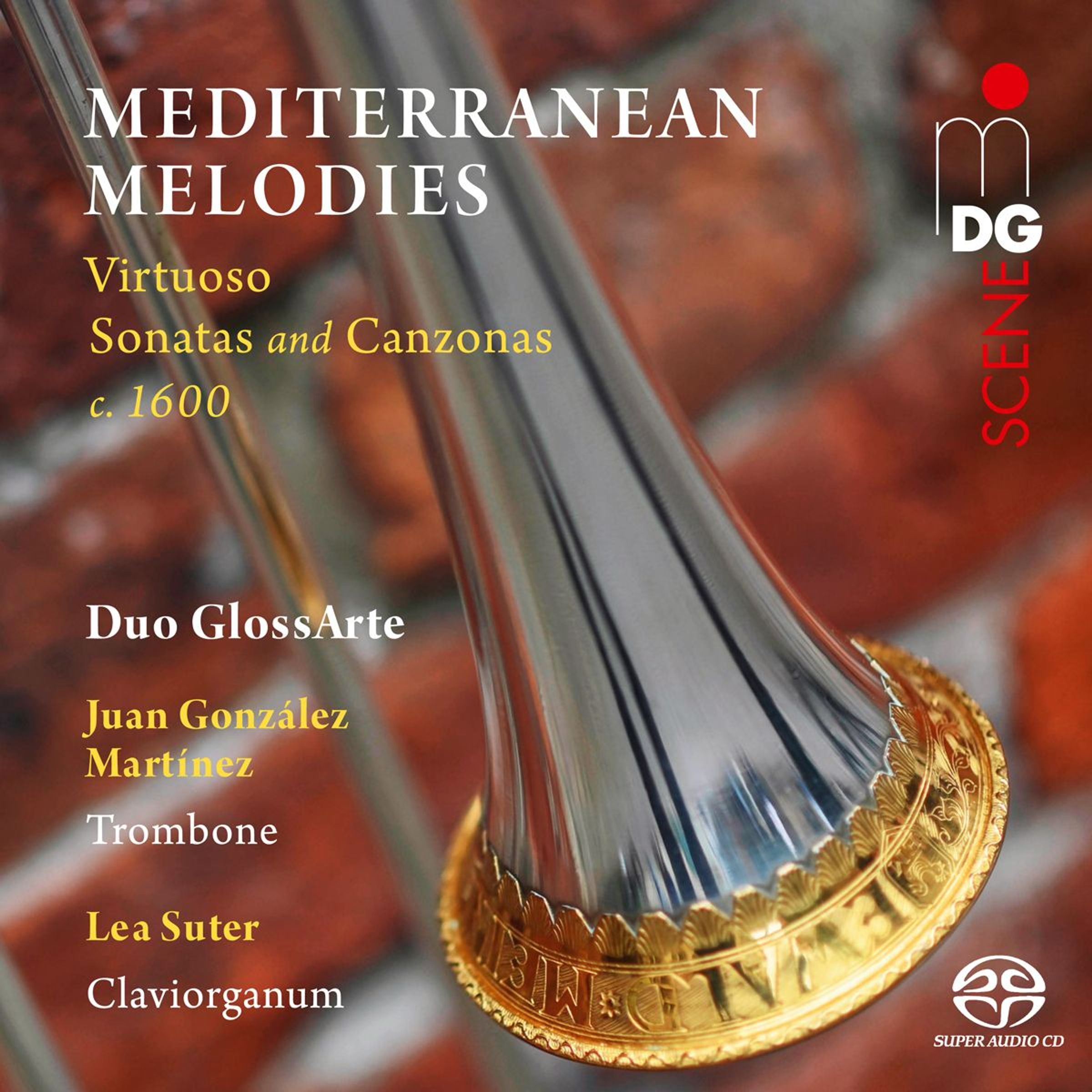
CD Recording – Mediterranean Melodies
With “Mediterranean Melodies,” Lea Suter and Juan González Martínez, as Duo GlossArte, present a project that places a rarely heard sound combination at its centre: silver trombone in dialogue with organ and harpsichord (as well as claviorganum). Starting from the musical centres around the Mediterranean, the programme leads through the first half of the 17th century—a time of stylistic new departures, shaped by virtuosity, rhetoric, and richly coloured affective expression.
The silvery, refined tone of historical trombones meets the carrying power and warmth of the keyboard instruments. This pairing creates a distinctive, transparent sound world: festive yet intimate, highly nuanced and nonetheless immediately accessible. “Mediterranean Melodies” is conceived as a listening journey into an era in which instrumental artistry, a spirit of improvisation, and expressive intensity found new forms.
Duo GlossArte combines historically informed performance practice with a vivid, engaged musical approach: clear lines, stylistically appropriate ornamentation, flexible tempi, and a keen sense of musical rhetoric. The project draws on a tradition in which such instruments were once regarded as cultural treasures—and translates that sound world into a present day that is curious for new perspectives on early music.
Press reviews (selection)
“The unmistakably delicate sound of the silver trombone … takes us on a journey around the Mediterranean …” Rhein-Main-Magazin (17 December 2025)
“Brisk tempi … ornaments in the style of the period … exuberant joy of playing.” Prof. Klaus Trapp, klassik-heute (27 December 2025)
“… warm and exquisite richness of sound … closes an important gap in the repertoire …” Adrian Quanjer, hraudio.net (30 November 2025)
“It all adds up to an easy-on-the-ear Renaissance programme.” Congleton Chronicles (22 December 2025)
Duo GlossArte winner of H.I.F. Biber-Competition
“Duo GlossArte clearly won the points-based scoring at the 9th International H. I. F. Biber Competition on 4 May 2025. The trombonist’s virtuosity came as a surprise, while the clear, focused tone and the varied programme delighted the audience.
Their gripping stage presence and their relaxed yet concentrated manner of performing rounded off the highly positive overall impression of this ensemble.”
Gunar Letzbor
(Artistic Director of the International H. I. F. Biber Competition
and Ensemble ARS ANTIQUA AUSTRIA)
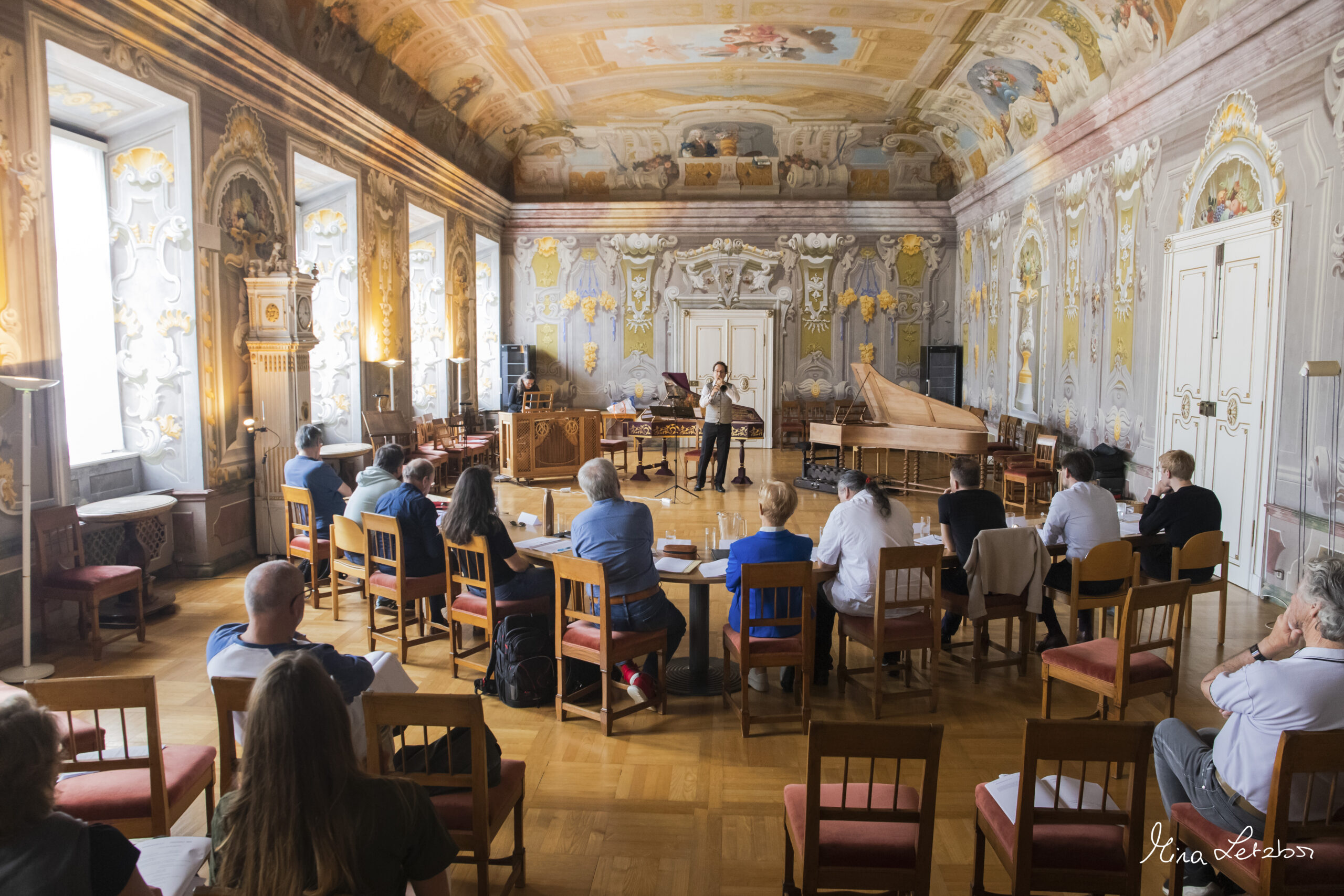

Historical Trombones & Organs
Historical instruments and their reconstructions
GlossArte’s founding project was Diego Ortiz´ sixteenth-century Tradado de Glosas. After working through repertoire of the Spanish and Italian Renaissance and early baroque eras, they were inspired to explore classical style and historical instruments of the Romantic era. The ensemble’s focus is on historically informed performance practice as a new journey of discovery inspired by the sounds of original historical organs or period-specific instrument reconstructions. To that end, GlossArte works closely with instrument builders when developing new projects.
Salzburger und Berliner Hofkapelle
soloconcerti for trombone & strings and harpischord & strings
What connects a concerto for harpsichord and one for trombone, Johann Sebastian Bach’s most famous son and his other relatives, the Berlin and Salzburg court orchestras, and a teacher of Beethoven who prophesied a dark future for him? All of them play a role in GlossArte’s current concert project about classical style.
Der Atem des Jugendstils
Art nouveau, Jugendstil, modernism, fin de siècle: the historical era at the end of the 19th century has many names. Most of us know and love the floral elements on art nouveau windows or doors, or the beautifully curved shapes of furniture from that time. But we generally know very little about the sound of the era!
Duo GlossArte is working to change that. Together with the Franz Kuhn Trombone Quartet, which plays an original set of four trombones from the 1920s, they have developed a program of virtuoso duos for trombone and organ, demanding solo literature for both instruments and lively operatic melodies and marches for trombone quartet.

The German Sauer Organ & Kuhn Trombone
When we think of historically informed performance practice, we generally think of baroque music. But even in the 20th century, orchestral instruments and ensembles grew ever louder and significantly, concert pitch was raised from a’ = 435 Hz to 443 Hz to ensure an ever more brilliant sound for larger and larger concert halls. That raises the question of historically informed performance practice of early 20th-century repertoire.

In 2021, GlossArte researched original historic trombones built by Franz Kuhn in combination with the Sauer organ in the “Glocke” concert hall in Bremen. The results were recorded on CD and included previously unpublished works by Eckhold, Belcke, Weschke & Merkel, among others. Immediately after its release on the Dabringhaus & Grimm label in 2022, the CD was nominated for the Preis der deutschen Schallplattenkritik (German Record Critics’ Prize).


